
8 Fields Every Helium Leak Test Report Should Include
A practical checklist for documenting helium leak tests with the conditions, measured values, acceptance criteria, and traceability needed for future review.
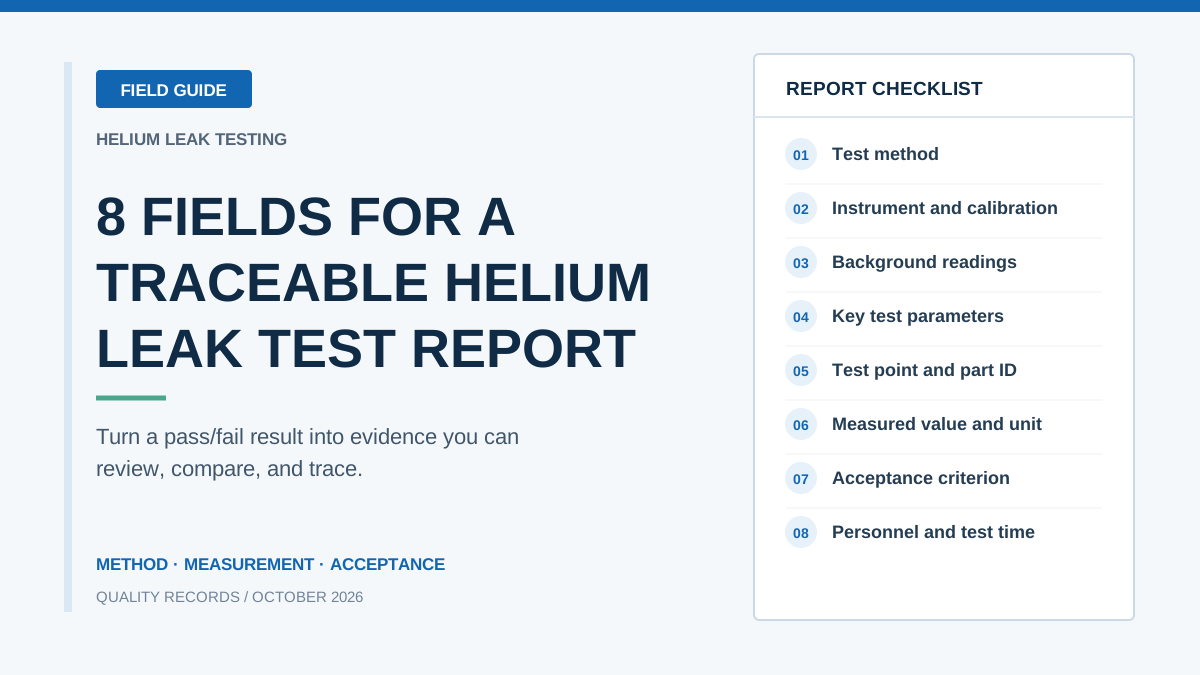
Helium Leak Test Report Template
PDF · 1 page
A leak test report that records only a date, a location, and the word “pass” may be difficult to use months later. If a component fails in service or a production result needs review, the record should show what was tested, how the test was run, what the instrument measured, and which acceptance limit was applied.
Eight basic fields make a result easier to compare, audit, and trace back to the test setup.
Eight Fields to Record
1. Test Method
State the method used, such as vacuum testing with tracer-gas spray, sniffer testing, or accumulation testing. Results from different methods are not directly comparable, so identify the method in every report. Where relevant, include the test configuration and procedure revision.
2. Instrument Identification and Calibration Status
Record the instrument type or model, serial number, calibration date, and calibration validity or expiry date. This links the reported value to the equipment that produced it and helps reviewers confirm that the instrument was within its required calibration interval when the test took place.
3. Background Readings
Document the background before and after the test. Background readings help show whether the test environment and instrument were stable enough to evaluate the part. Keep the readings with the result so a reviewer can see the context, not just the final decision.
4. Key Test Parameters
Record the settings that affect the result. Depending on the method, these may include sniffer scan speed, spray duration and pressure, evacuation time, accumulation time, or tracer-gas concentration. Mark parameters that do not apply as not applicable instead of leaving the record ambiguous.
5. Test Point and Part Identification
Identify the tested component and the exact location or points covered. Use a serial number, weld number, connection ID, line segment, or a referenced drawing. “Entire assembly” is useful only when the report also makes clear which interfaces were included in the test.
6. Measured Value and Unit
Include the measured leak rate and its unit, not only a pass/fail label. If values are converted between units, show the conversion or identify the reporting unit consistently. This allows later reviewers to compare results without guessing how the number was expressed.
7. Acceptance Criterion and Reference
State the allowable limit and the document that defines it, such as a standard, customer specification, drawing, or contract requirement. Include the applicable revision where one exists. A result is meaningful only when the threshold used to judge it is clear.
8. Personnel and Test Time
Record who performed the test, who reviewed it, and when it was completed. Add a production batch or work-order reference when needed to connect the report to the manufacturing record.
Make the Record Useful Later
File reports using a stable part, line, or work-order identifier. Keep the leak test record with related documents such as purge, weld, inspection, or assembly records when they are part of the same traceability chain. A technician should be able to retrieve the complete record set for one component without relying on memory or informal notes.
Put a short summary near the beginning of the report: test method, relevant sensitivity or acceptance limit, measured result, and conclusion. This gives managers a quick overview while preserving the detailed readings and conditions that engineers need for investigation.
Connect the Result to the Test Setup
A helium leak detector can provide a measured result, but the report makes that result interpretable. Recording the method, instrument identity, background, settings, test location, and acceptance basis helps teams review the decision and compare it with later tests.