









Wayeal

SFZ-344-RMU

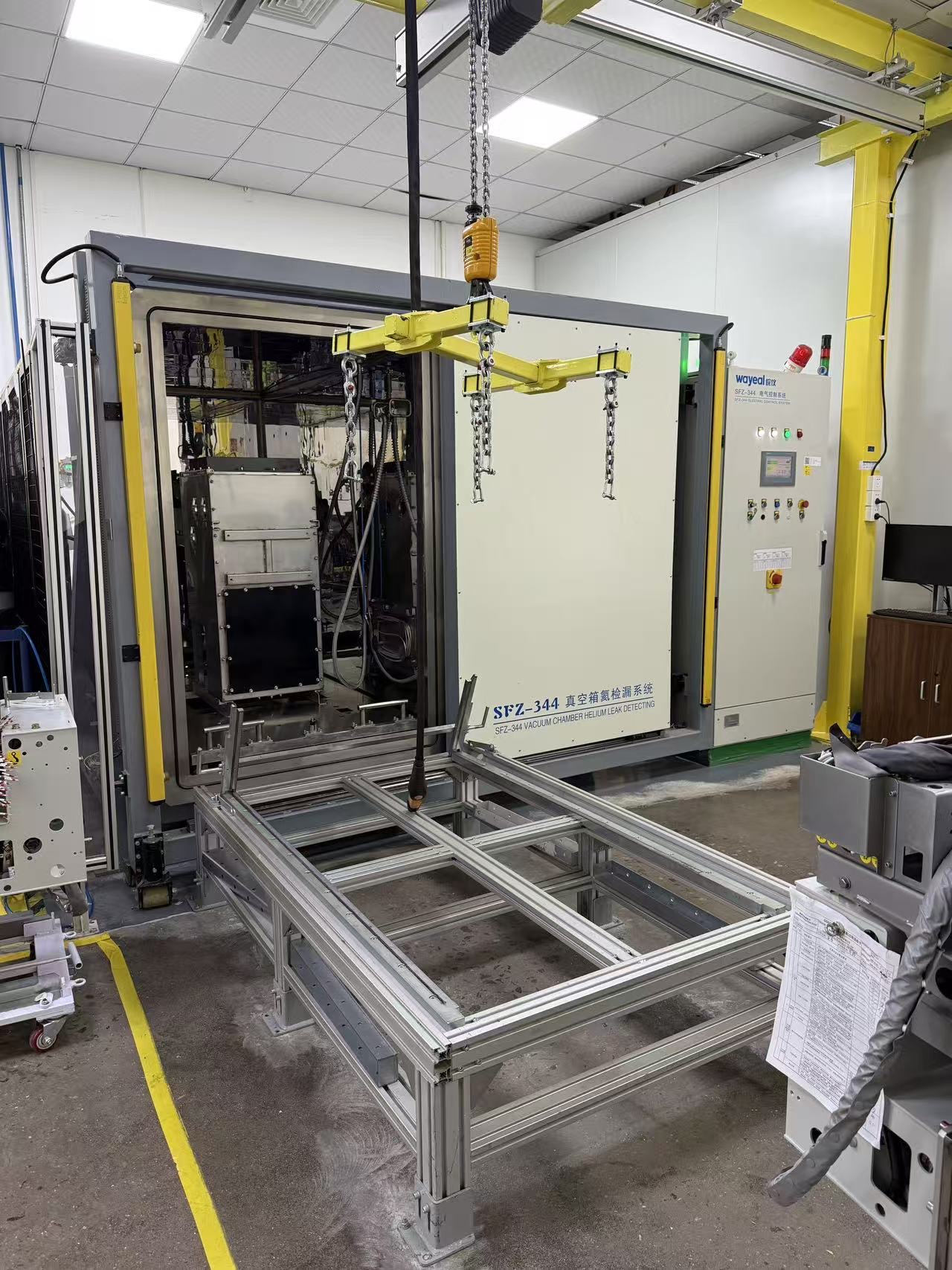
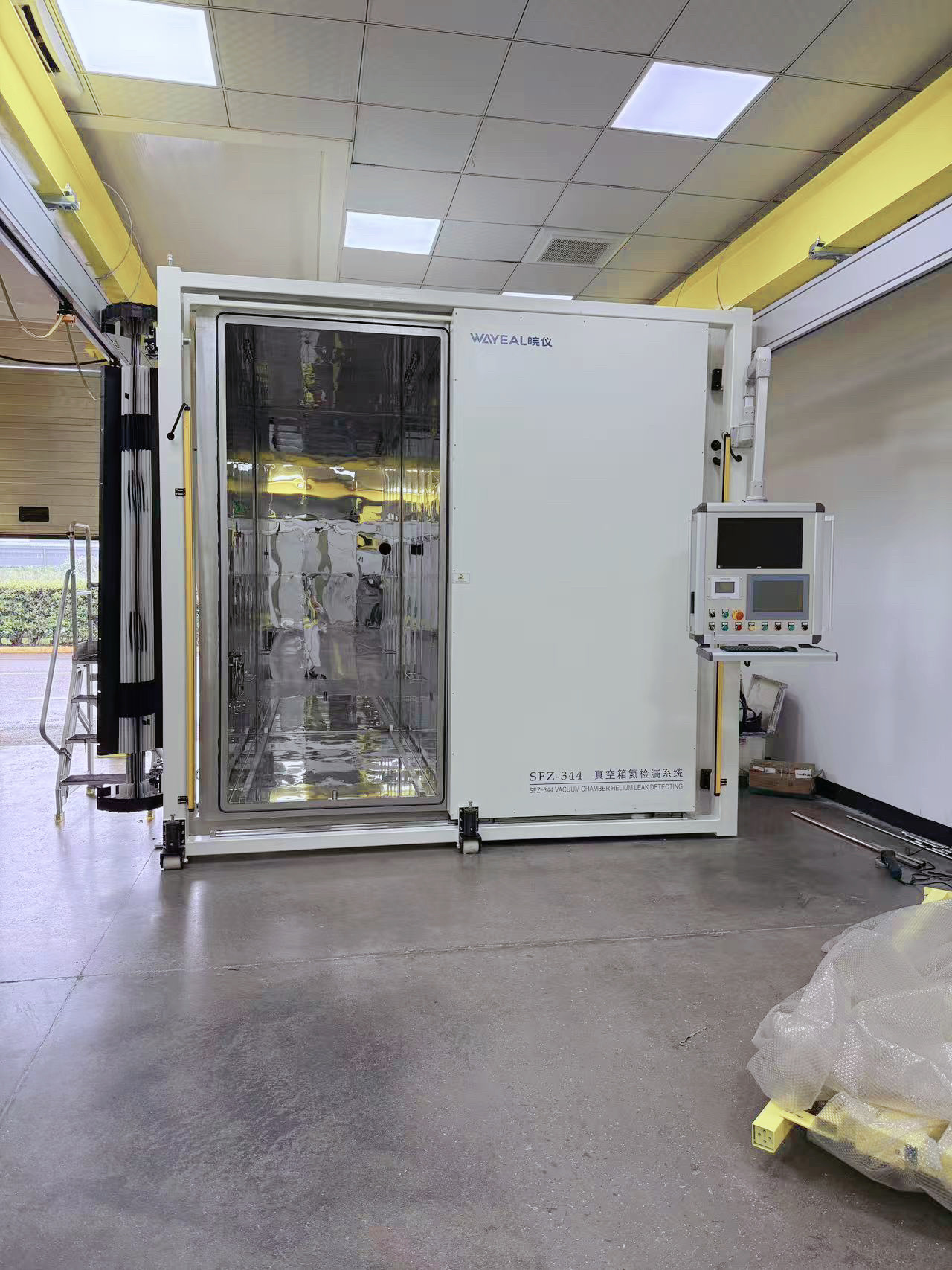
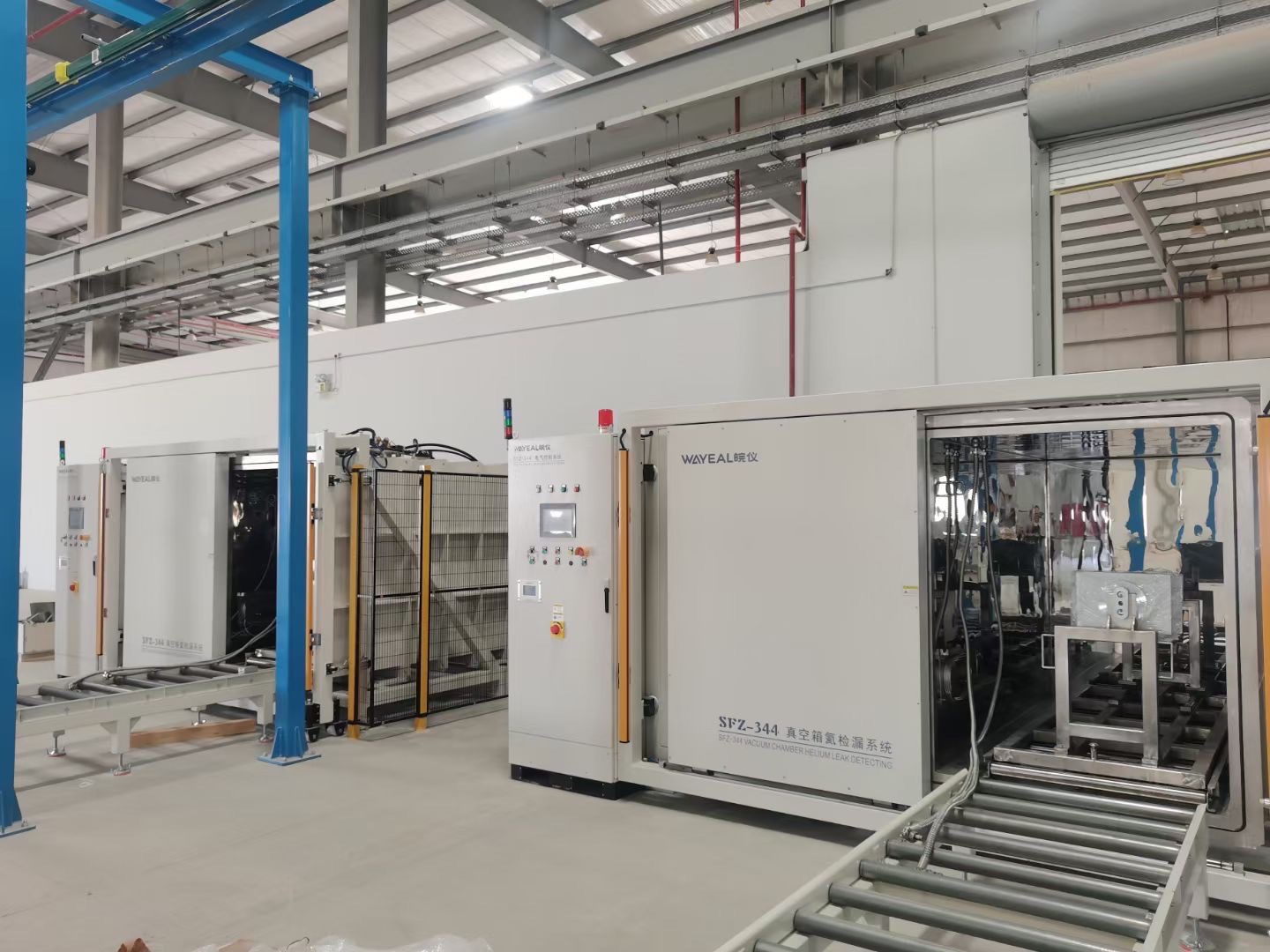
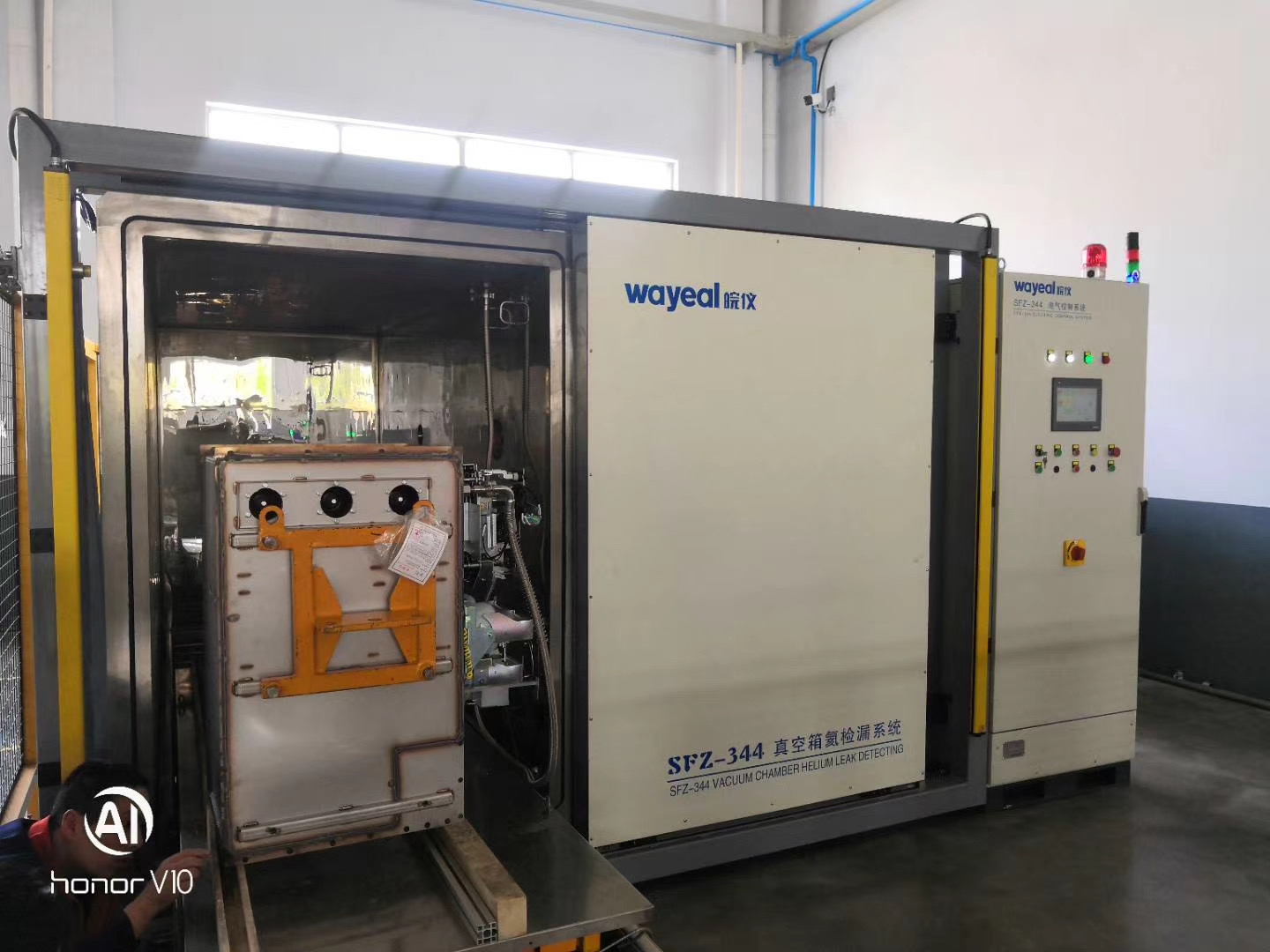
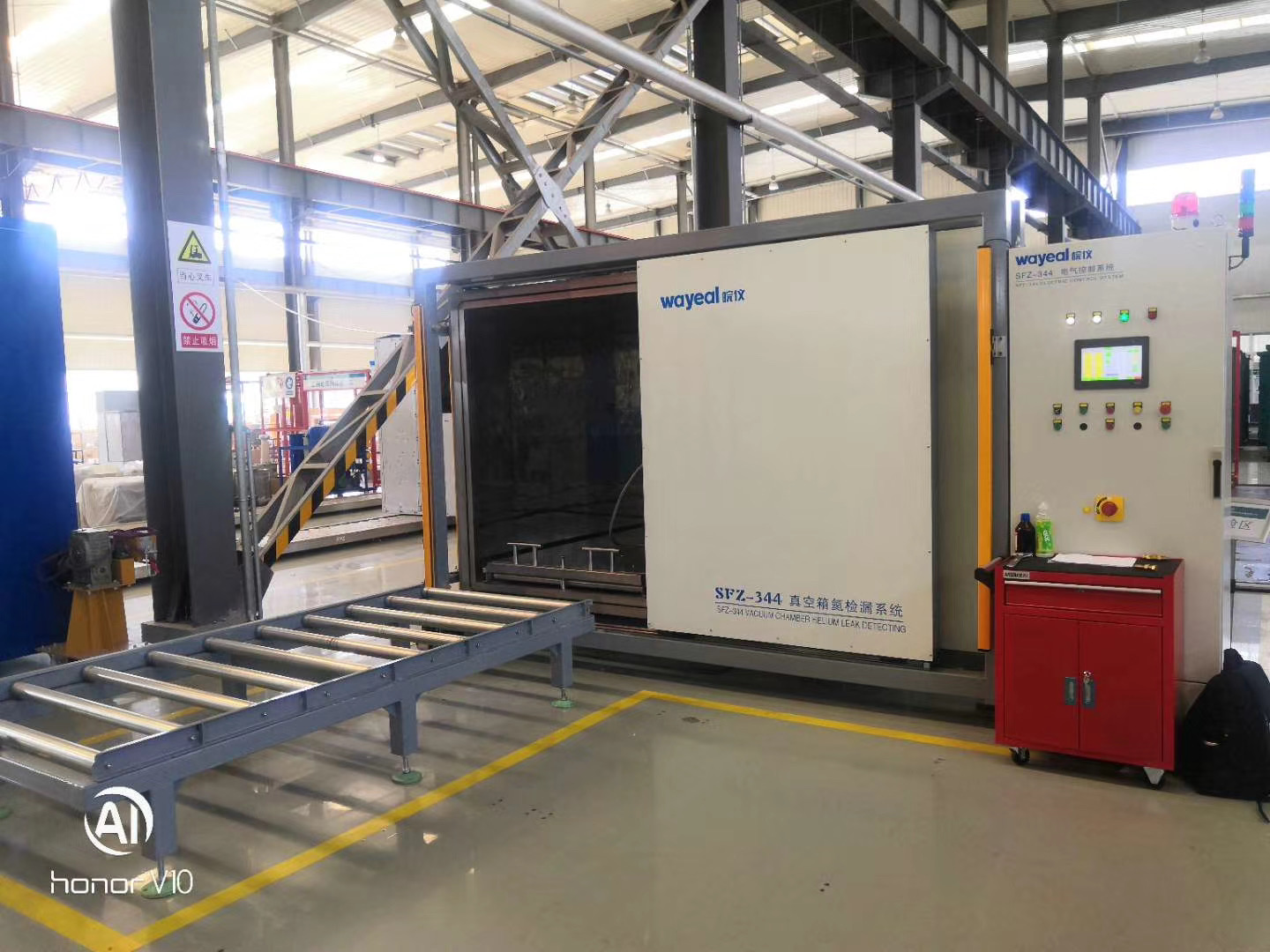
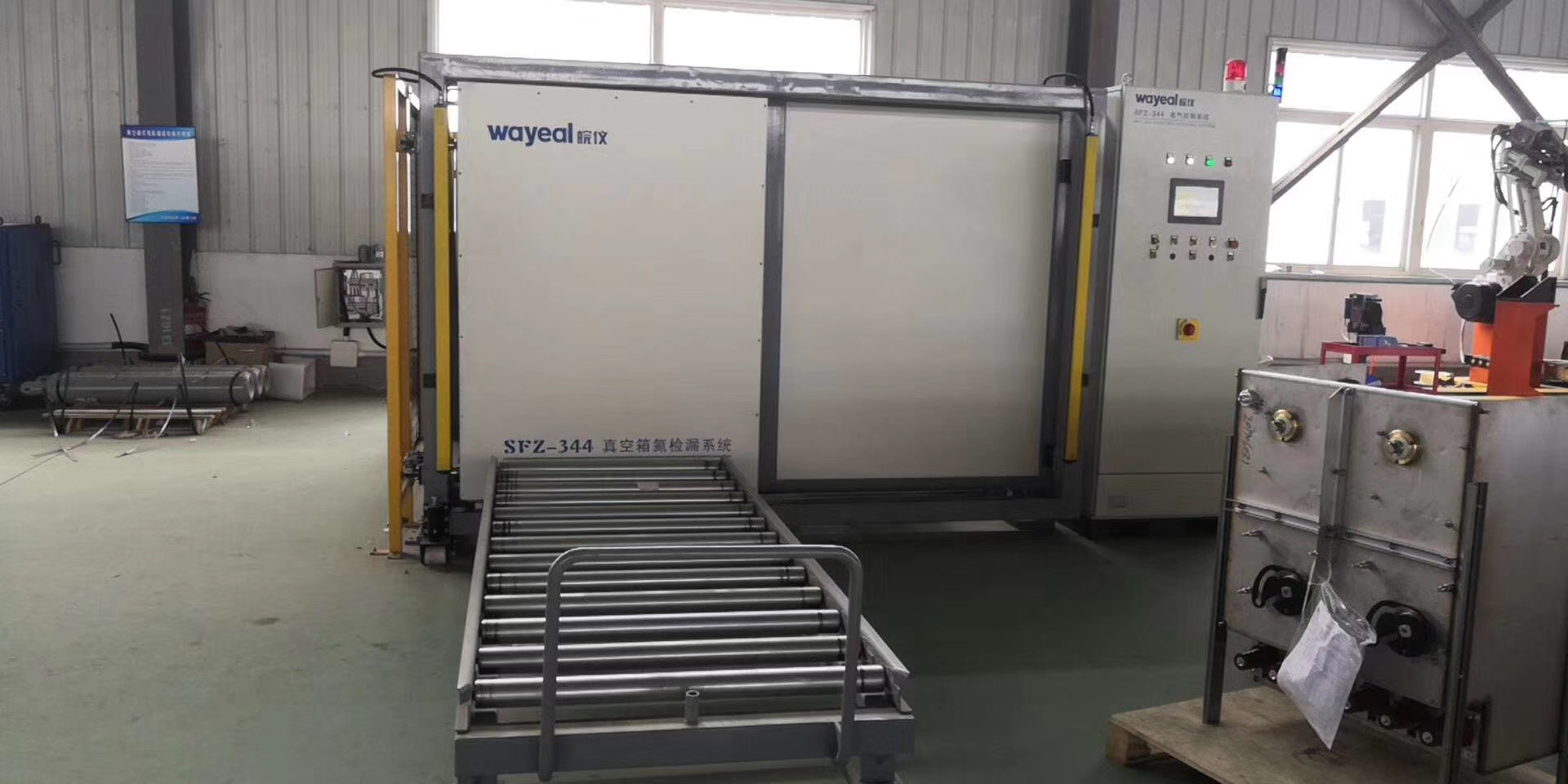
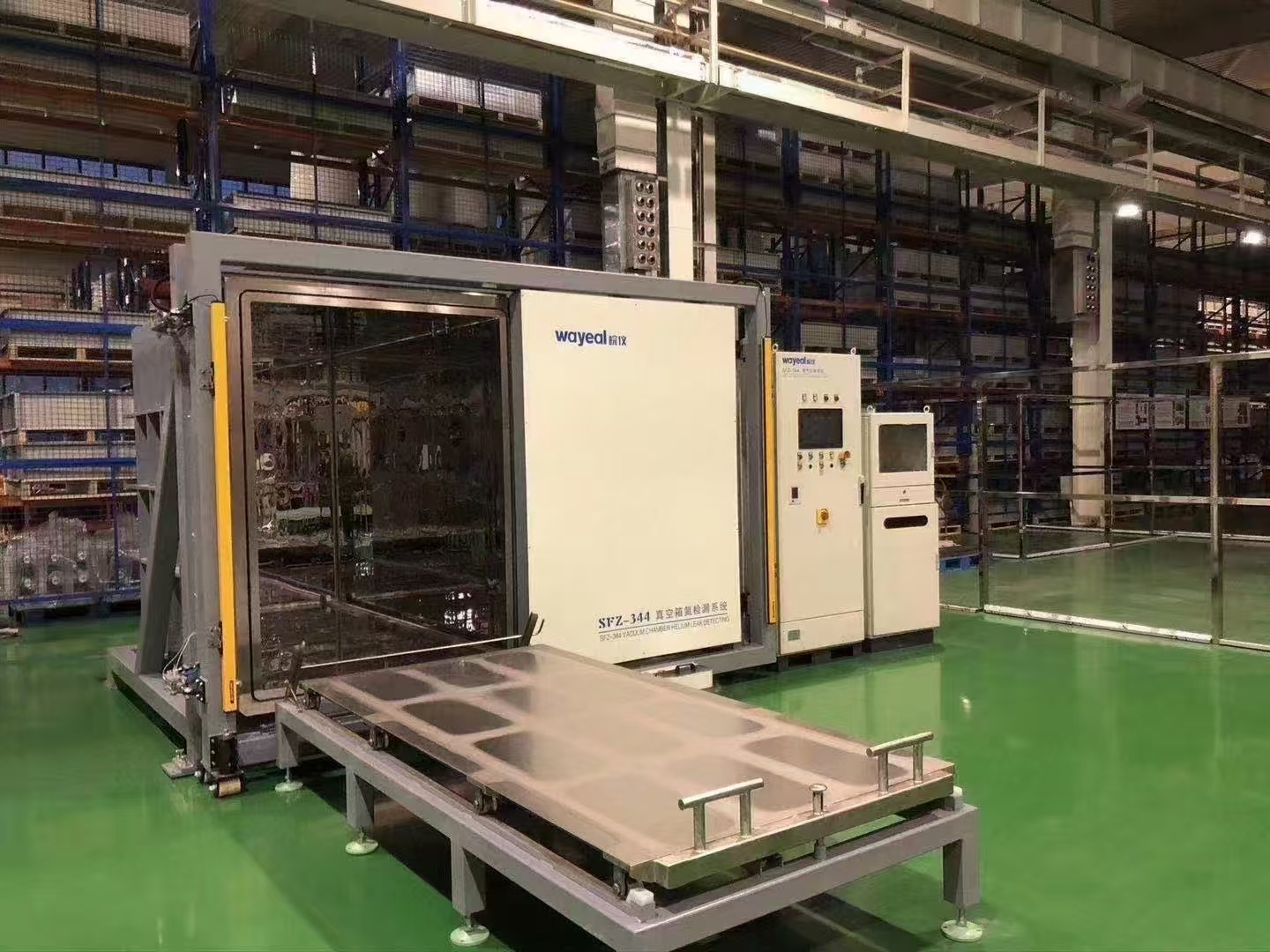
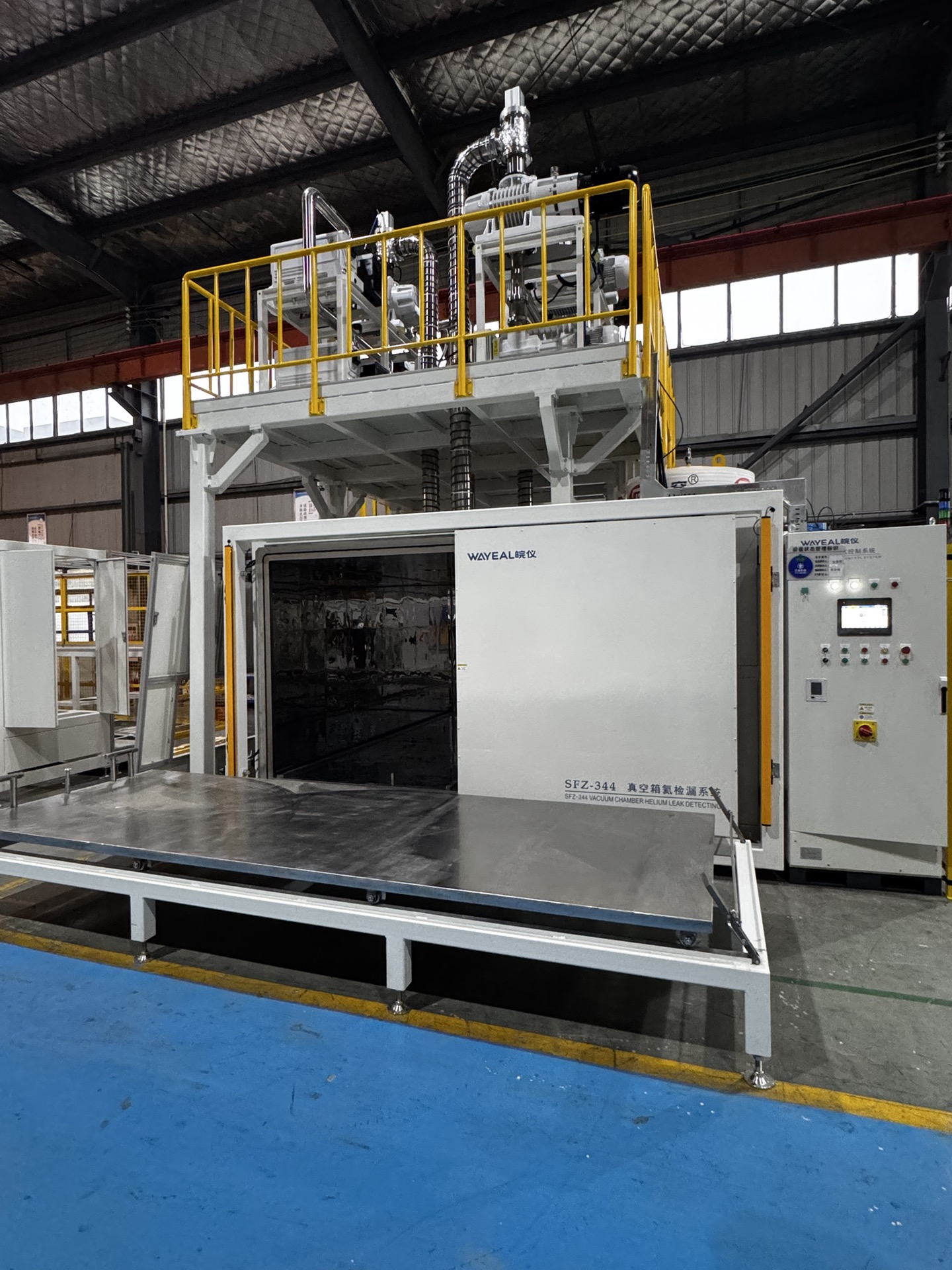
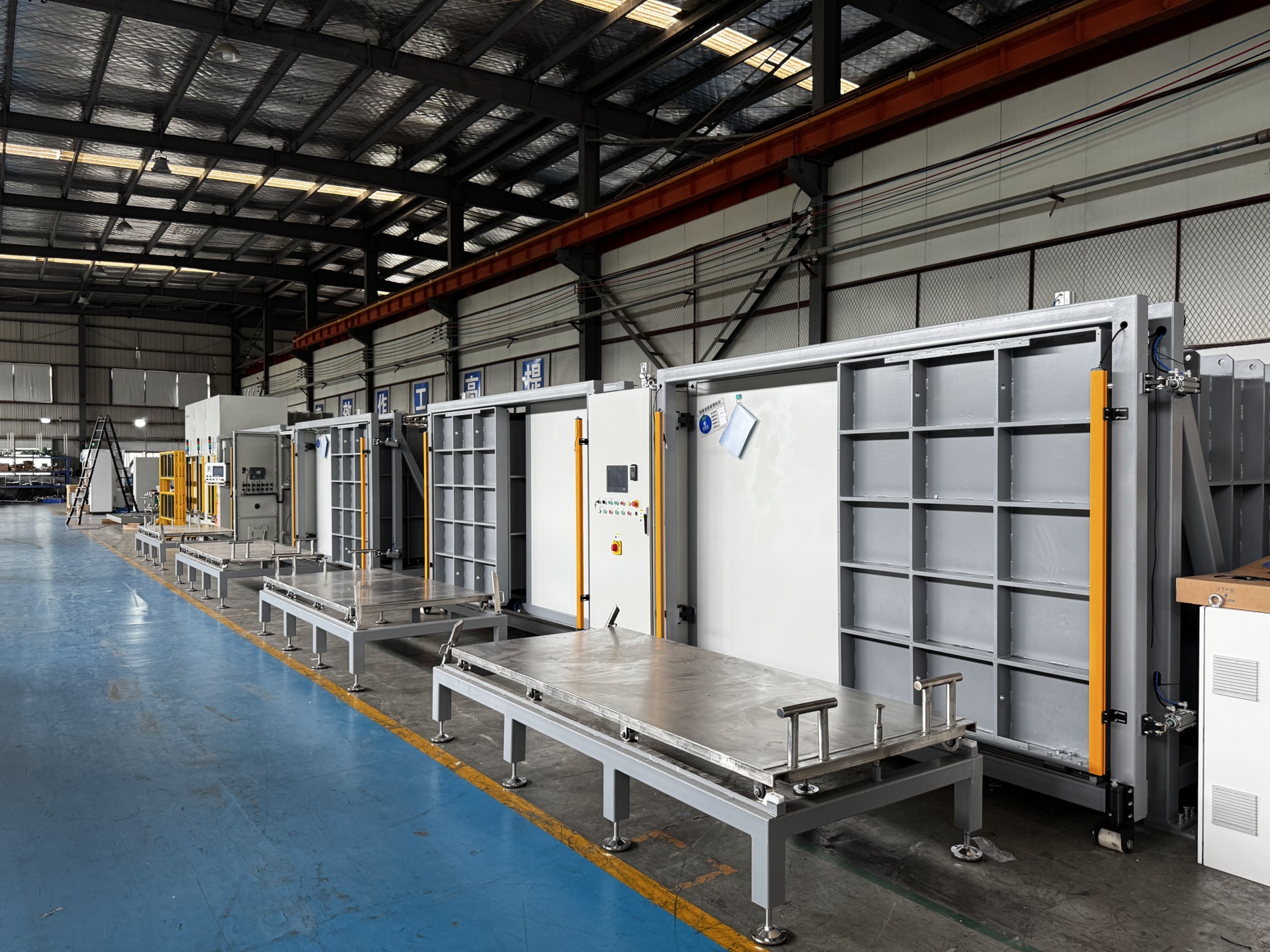
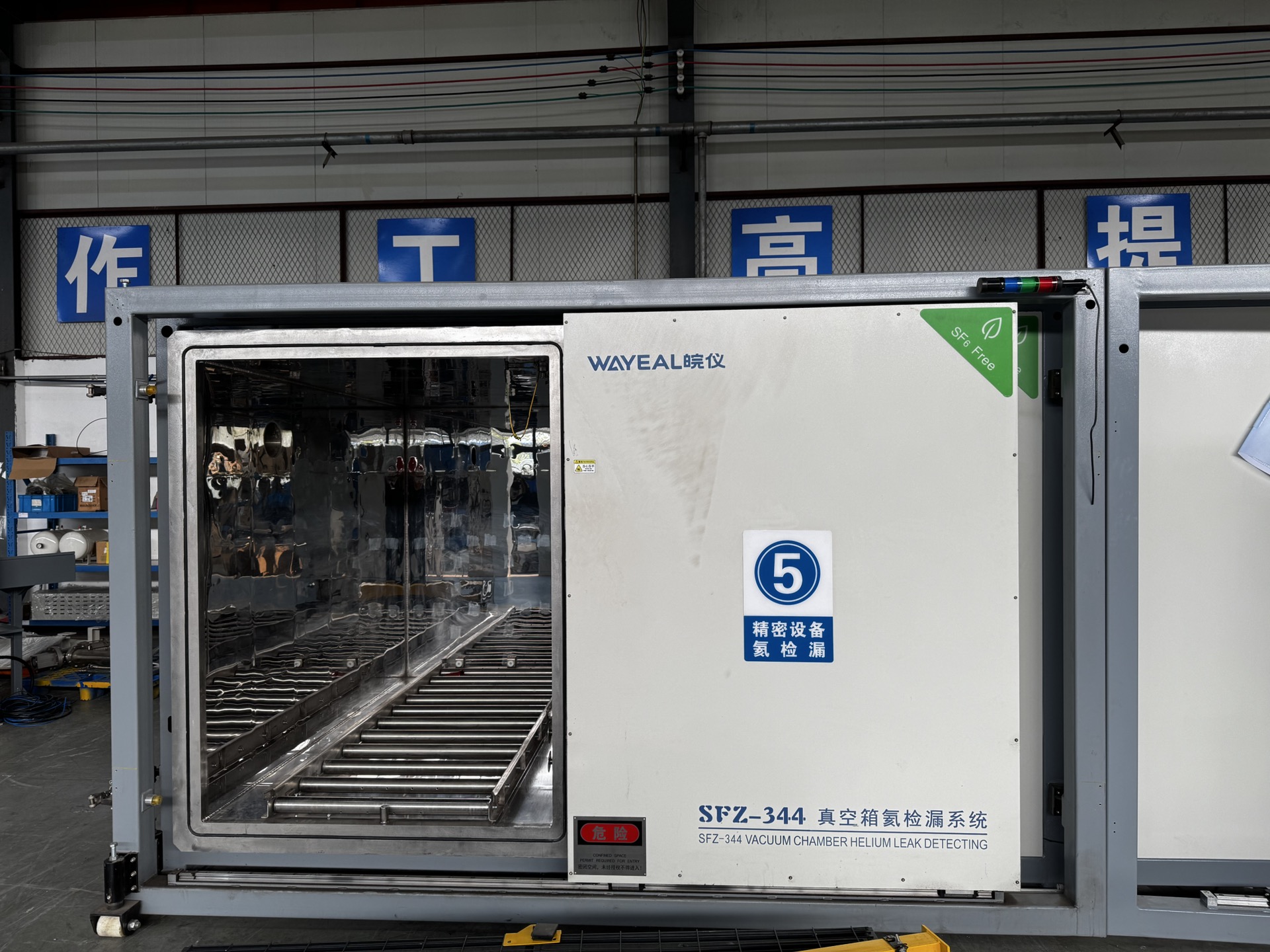
SFZ-344 RMU Helium Leak Detection System

A configurable vacuum chamber helium leak detection solution for RMU, GIS, and sealed switchgear components, designed around part size, test pressure, leak rate, takt time, and helium recovery requirements.

I Main Technical Specs

Leak Rate Standard
1×10⁻⁶ Pa·m³/s
Chamber Quantity
1
Chamber Size
Shall be determined by customer products
Number of Workpieces Tested per Chamber
1
Cycle Time
Shall be determined by the customer
Testing Parameters:
Helium Pressure
0-0.05 MPa, with adjustable pressure within this range
SF6 or SF6-free gas charging pressure (absolute pressure)
0.05-0.15 MPa, adjustable within this range
Leak Detector Start Testing Pressure
≤ 30 Pa inside the vacuum chamber
Workpiece Evacuation Pressure
≤ 1000 Pa, adjustable upward
Helium Recovery Rate
98%

II System Working Principle

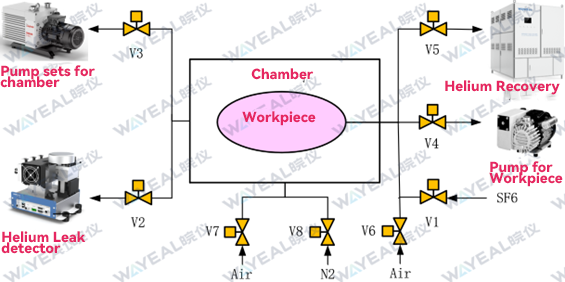
SFZ-344 RMU vacuum chamber helium leak detection system principle diagram
1

Vacuum Evacuation for Gross Leak Detection

During leak detection, place the workpiece on the pallet, manually push the pallet and workpiece into the vacuum chamber, connect the workpiece to the system, and press the dual-start button. The chamber door closes automatically, and the remaining processes are completed by the system.

After the chamber door is securely closed, the system opens Valve V3 and closes the other valves to evacuate the vacuum chamber and workpiece simultaneously. It monitors the vacuum levels inside both the workpiece and the chamber, keeping the pressure difference between them within 0.05 MPa.

When the vacuum chamber reaches 100 Pa and the workpiece is evacuated to 30000 Pa, the system holds pressure for 30 seconds. The pressure and holding time are adjustable. It then measures the vacuum-level changes of both the workpiece and chamber.

If the vacuum-level change in the chamber does not exceed the set value, for example 100 Pa, the workpiece is treated as free of gross leaks and the system continues evacuation for medium and micro leak detection.

If the vacuum-level change exceeds the set value, the system identifies a gross leak, triggers audible and visual alarms, inflates the workpiece and chamber synchronously, and opens a selection interface for termination or manual leak location.

For manual location, the chamber door opens and the workpiece can be inflated with nitrogen at the specified pressure while maintaining the pressure-difference requirement. After manual inspection, the operator confirms deflation and the system ends the detection with a prompt.

2

Medium and Micro Leak Detection

If no gross leaks are detected and both the vacuum chamber and workpiece meet the required vacuum levels, for example 30 Pa absolute pressure for the chamber and 30000 Pa absolute pressure for the workpiece, the system proceeds to medium and micro leak detection.

For medium leak detection, low-pressure helium, for example 0.01 MPa, is filled into the workpiece. If no medium leak is detected, helium at the set pressure is filled into the workpiece to simulate the actual operating environment for micro leak testing.

For unqualified workpieces with medium or micro leaks, the system triggers an alarm, fills the vacuum chamber to atmospheric pressure, and simultaneously inflates the workpiece with helium to 150000 Pa absolute pressure while keeping the internal-external pressure difference within 0.05 MPa.

The detection program is terminated and the workpiece is removed from the chamber. The operator can switch to sniffer leak detection mode to inspect suspicious points such as joints and welds for precise leak location.

If no micro leaks are detected, the system automatically proceeds to the next procedure.

III System Workflow

OK

OK

NG

NG

NG

NG

OK

OK

Chamber

Work piece

Close door

Chamber pressure 100Pa

30S gross leak check

Connect workpiece

Workpiece pressure 30000 Pa

Chamber pressure 30Pa

Helium Background test

Helium charging to 50000 Pa

Helium leak test
vacuum mode

Workpiece and chamber
vent to air pressure

Open door

Chamber

Work piece

Chamber keep 30 Pa

Helium recovery to 1000 Pa

SF6 charging 30000Pa

Fill air to 60000Pa

SF6 charging 90000Pa

Chamber vent

Open door

Fill air to 90000Pa

Fill air to 100000Pa

Open door

SF6 charging 120000Pa

SF6 charging 150000Pa

Take out workpiece

Helium charging to 150000Pa

Take out work piece, use sniffer

Back to chamber, He recovery

IV Main Optional Configurations

Components Brand Options
Helium Leak Detector Wayeal / Inficon / Leybold
Vacuum Pump Leybold / Edwards / Atlas Copco
Compressor Ingersoll Rand / Desran
Solenoid Valve GSR / COAX / CKD / SMC
Vacuum Gauge Wayeal / Inficon / Leybold
Pressure Sensor Micro Sensor / Airtac / WIKA
Vacuum Valve Wayeal / CKD
Safety Light Curtain Lion / SENSORC
PLC (Programmable Logic Controller) Schneider / Siemens / Mitsubishi / Omron / Inovance
Touch Screen Panel Weinview / Schneider Electric
Handheld Barcode Scanner Honeywell / Keyence
Industrial PC Advantech
Printer TSC
Electrical Components Schneider / Panasonic / IDEC, etc.

Configure SFZ-344 For Your RMU

Send us your RMU or GIS component dimensions, port layout, target leak rate, test pressure, takt time, and automation needs. We will match the chamber, pump set, fixture, and helium recovery design to your process.