
ASTM 316L Manifolds: Meeting the Leak-Free Standard for Rubin-Class AI Cooling
As AI power densities surge, switching to ASTM 316L for liquid cooling manifolds provides the critical corrosion margin, welding stability, and leak-test reliability needed to prevent catastrophic server leaks.
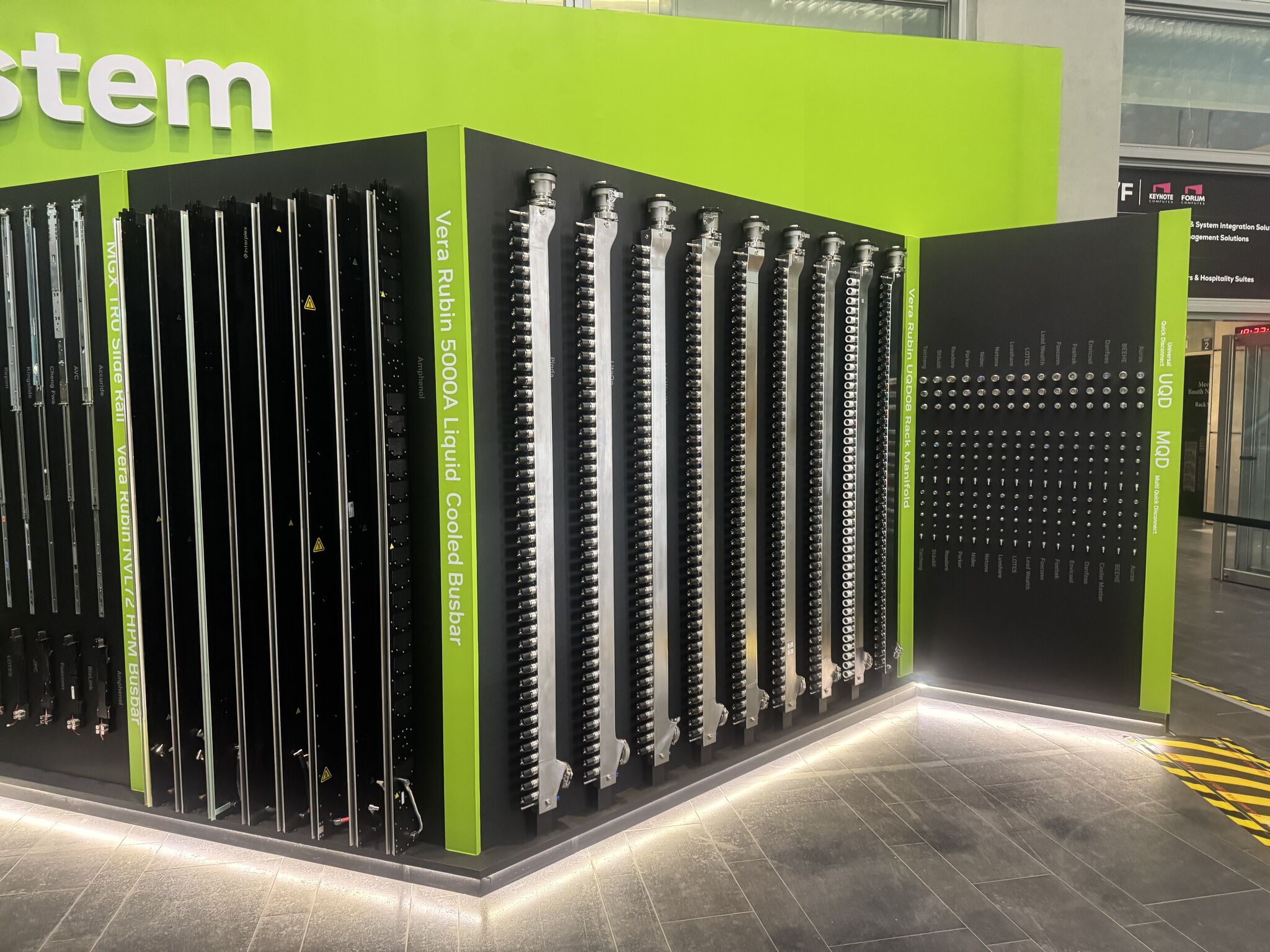
AI liquid cooling is now a production-quality issue. As Rubin-class AI platforms raise rack power density, each cabinet needs more cold plates, CDU connections, quick disconnect interfaces, tubing branches, and liquid cooling manifold ports.
The manifold is one of the most demanding parts in that loop. It distributes coolant and forms a pressure boundary around long channels, threaded ports, welded joints, vacuum brazed sections, and sealing faces. A small defect can become leakage or cold plate contamination after assembly.
For this reason, ASTM 316L stainless steel is increasingly preferred for AI liquid cooling manifolds. Compared with 304 stainless steel and copper, it gives manufacturers stronger corrosion resistance, weld quality, cleanliness, and sealing stability.
Why ASTM 316L Beats 304 and Copper in Manifolds
304 stainless steel can work in general water circuits, but ASTM 316L adds molybdenum and has low carbon content. That matters when coolant additives, chloride ions, cleaning residue, and temperature changes affect wetted materials. ASTM 316L offers better resistance to pitting, crevice corrosion, and weld-related corrosion risk.
| Material | Useful Strength | Manifold Limitation |
|---|---|---|
| 304 stainless steel | Cost-effective stainless option for general water circuits | Lower pitting and crevice corrosion margin than ASTM 316L |
| Copper | Excellent thermal conductivity for cold plates close to GPUs | Less preferred for manifold pressure structures, welded bodies, and long-term sealing faces |
| ASTM 316L | Strong corrosion margin, weld stability, and clean pressure-boundary behavior | Best fit for demanding AI liquid cooling manifolds, tubing, and connector bodies |
Copper remains important for cold plates because thermal conductivity is critical near GPUs. A manifold is different: it needs rigid pressure-boundary geometry, repeated sealing faces, stable threaded or brazed interfaces, and clean internal passages. Here, ASTM 316L is often the better choice.
Manufacturing Risk Still Has to Be Controlled
ASTM 316L improves the reliability baseline, but it does not remove manufacturing risk. CNC machining must control tool wear, burrs, work hardening, deep-hole quality, thread accuracy, and sealing-surface finish. Long channels and repeated branch ports create many possible leak paths.
Joining is equally important. Laser welding can create porosity, undercut, distortion, or heat-affected defects if parameters drift. Vacuum brazing is useful for compact manifold bodies and internal cavities, but incomplete wetting, voids, or poor surface preparation can still create hidden leakage. Cleaning and passivation reduce residues that could damage cold plate microchannels.
Helium Leak Testing Is the Final Gate
Pressure testing can screen gross failures, but high-reliability liquid cooling assemblies often need stronger sensitivity. Helium leak testing can detect micro leak paths around ports, plugs, welds, vacuum brazed joints, gasket seats, quick disconnects, and blind-mate connector zones.
Wayeal applies the same material logic to test equipment. Its vacuum chamber leak detection systems use ASTM 316L extensively in system piping, valve manifolds, connector interfaces, and gas-handling paths to support cleanliness, corrosion margin, and long-term sealing stability at production scale.
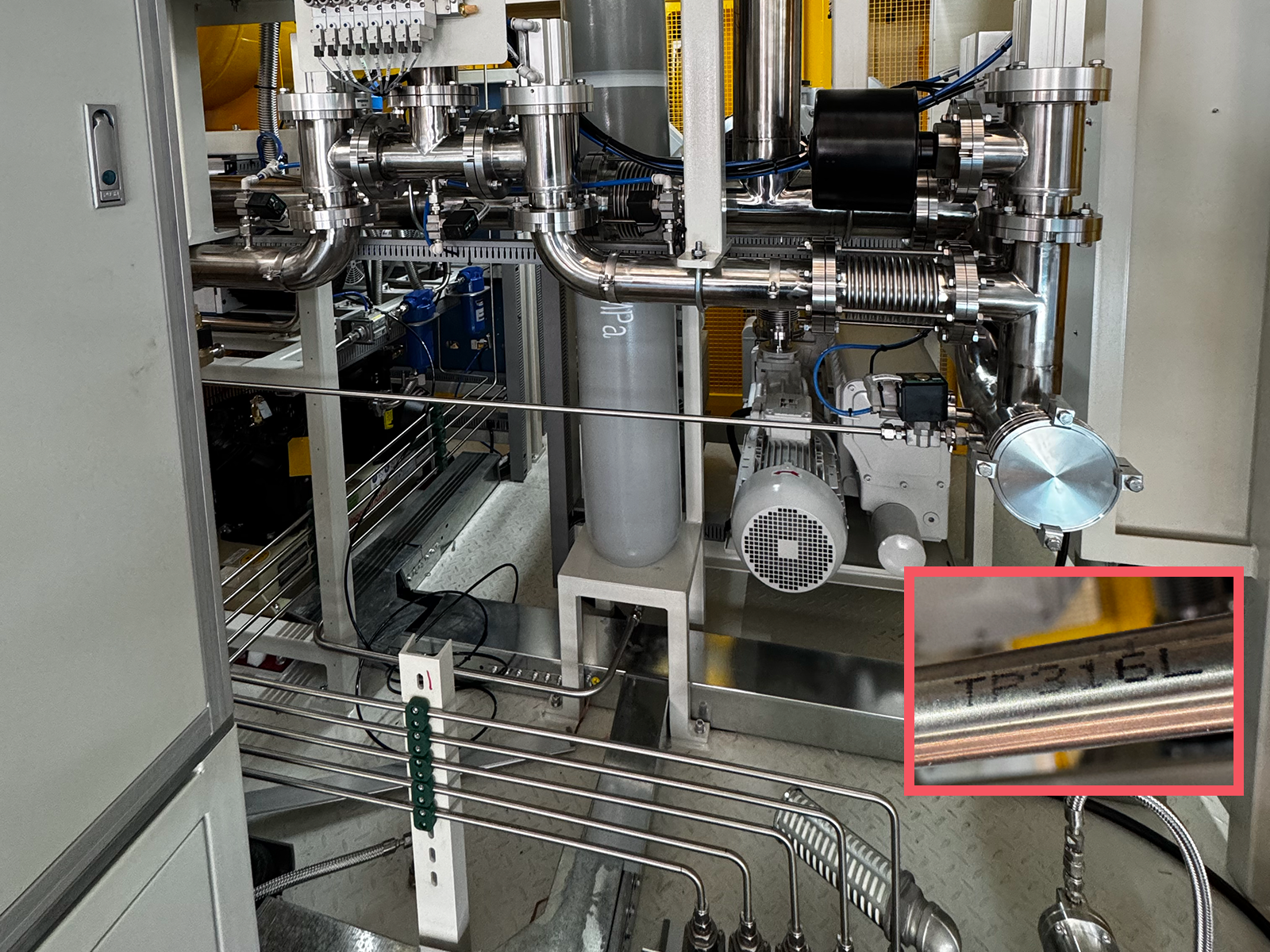
For manifold production, a vacuum chamber leak detection system can test the complete workpiece by filling the internal volume with tracer gas and measuring escaped helium under controlled chamber conditions. The same logic applies to liquid cooling cold plates, liquid cooling bellows, UQD connectors, and CDU assemblies.
Wayeal builds application-specific helium leak testing around the actual part: chamber size, fixture design, port layout, target leak rate, takt time, pump set, and helium handling. Combined with the SFJ-231 helium leak detector, this helps verify ASTM 316L manifolds before production.